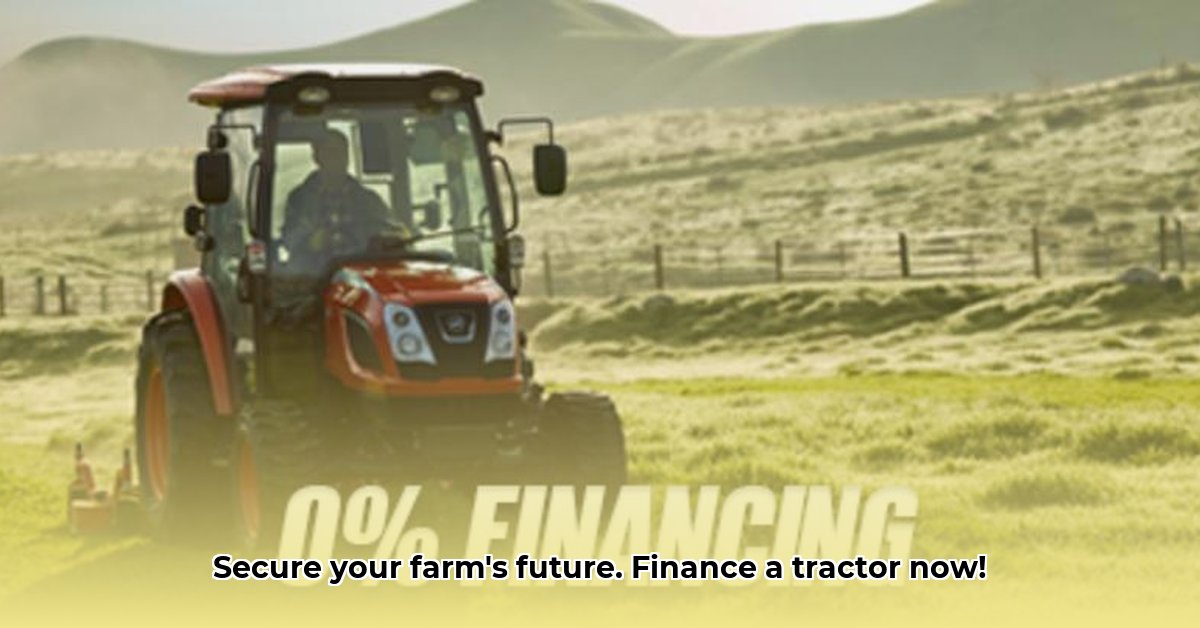
Understanding Your Tractor Financing Needs: More Than Just the Price Tag
Before you even think about loan applications, you need a clear financial picture. What type of tractor do you need? A small, versatile model, or a larger, more powerful machine? Your choice depends on several key factors:
- Farm Size and Type: A large-scale operation will require different equipment than a small organic farm.
- Crops and Practices: Sustainable farming often utilizes specialized equipment (e.g., for precision irrigation or no-till planting). This increases costs but yields significant long-term benefits.
- Your Budget: Honestly assess your finances. How much can you afford as a down payment? What are your projected monthly cash flows? This crucial step prevents future financial stress.
For great tractor deals in North Carolina, check out these packages.
Exploring Tractor Financing Options: Beyond the Usual Suspects
Major manufacturers like John Deere and Kubota offer financing packages. These often include competitive rates and flexible payment plans aligned with farming cycles. However, they may not be your best option.
Manufacturer Financing: Weighing the Pros and Cons
| Feature | Pros | Cons |
|---|---|---|
| Interest Rates | Often competitive, particularly for new equipment | May not be the lowest rates available. |
| Payment Plan Flexibility | Tailored to seasonal income patterns | Payment terms might be shorter than other options. |
| Convenience | Convenient one-stop shop for equipment and finance | Less negotiation flexibility regarding loan amounts and other specific conditions. |
| Special Offers | Potential for manufacturer-specific promotions and discounts | May not always suit the unique needs of sustainable farming practices. |
Finding Specialized Financing for Sustainable Agriculture: Thinking Outside the Box
Traditional financing methods often fall short for sustainable practices. Fortunately, more specialized options are emerging:
- Niche Lenders: Smaller banks and credit unions specializing in agricultural loans may be more understanding of sustainable farming's long-term payoff. They might be more willing to finance practices with higher initial investments.
- Government Grants and Subsidies: Explore local, state, and federal programs designed to promote sustainable agriculture. These can dramatically reduce upfront costs. Are you taking advantage of all available government incentives?
- Carbon Credit Financing: This innovative approach allows you to generate carbon credits by adopting carbon-sequestering practices. These credits can then offset your financing costs—a rapidly growing area with immense potential.
- Equipment Leasing: Leasing reduces initial investment and allows for upgrades as technology evolves, crucial in the dynamic field of sustainable agriculture. Is leasing a more financially viable strategy for your farm?
Developing Your Financial Plan: Setting Yourself Up for Success
Securing a loan is just one part of a sound financial strategy. Follow these steps:
- Create a Detailed Budget: Include all costs: tractor price, maintenance, repairs, fuel, and operating expenses. Don't forget potential unforeseen costs. A comprehensive budget is essential for both loan approval and long-term financial health on your farm.
- Explore Loan Options: Compare interest rates, repayment terms, and fees from multiple lenders. Longer loan terms reduce monthly payments but increase overall interest paid.
- Develop a Contingency Plan: Farming is unpredictable. Account for potential setbacks (e.g., bad weather or crop failures) that could affect your ability to make payments. Does your contingency plan account for climate disruptions and reduced yields?
Navigating the Application Process: Making Your Case
Loan applications require meticulous preparation. Gather all financial documents and create a strong business plan. Highlight your farm's commitment to sustainability and how the tractor will contribute to your environmental and financial goals. A compelling application increases your chances of approval.
Managing Risk in Sustainable Farming: Preparing for the Unexpected
Sustainable agriculture presents unique risks. Here's how to mitigate them:
| Technology/Practice | Risk(s) | Mitigation Strategies |
|---|---|---|
| Precision Irrigation Systems | Equipment malfunctions, water scarcity, power outages | Invest in robust equipment, explore water conservation, and consider backup power sources. |
| Renewable Energy (Solar, Wind) | Intermittency, equipment failure | Consider energy storage, diversify energy sources, and obtain comprehensive warranties. |
| Organic Farming Practices | Lower initial yields, pest outbreaks | Implement Integrated Pest Management (IPM) and diversify crops and utilize cover crops. |
| No-Till Farming | Compaction issues, weed management challenges | Implement careful soil management practices and appropriate tillage techniques. |
By implementing these strategies and developing a comprehensive plan, you substantially enhance your chances of securing necessary financing. Seeking expert advice from agricultural consultants and financial advisors is highly recommended. The path to sustainable farming is paved with smart planning and responsible financing.
Conclusion: Embrace the Future of Sustainable Farming
Securing the funding for sustainable agriculture equipment is an investment in your farm’s future. By following these steps and leveraging available resources, you can cultivate a profitable and environmentally responsible farming operation. Don't hesitate to seek expert guidance—the rewards are well worth the effort. What steps will you take today to secure your farm's sustainable future?